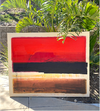
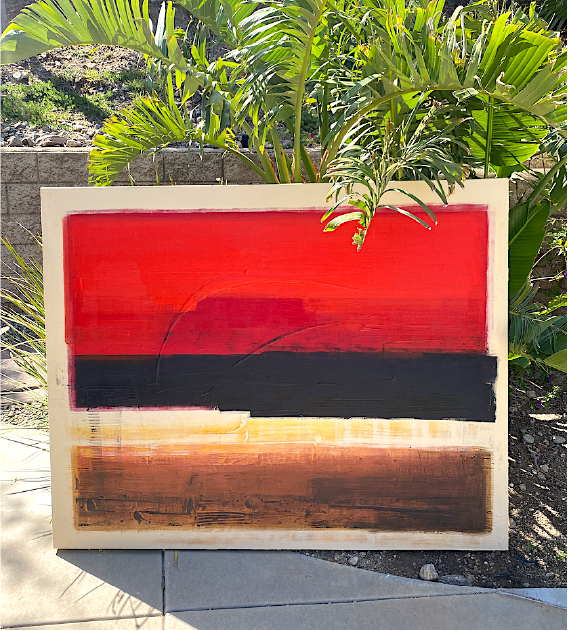
I was raised in California, and the land has never let go of me. The mountains that ring my childhood are still the first thing I picture when I close my eyes — not as scenery, but as witnesses. I've always believed they were watching over me, holding the years the way a photograph does, except softer, and always shifting with the light. That feeling is the seed of every piece in this body of work.
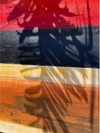
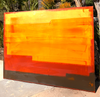
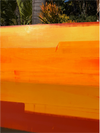
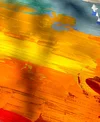
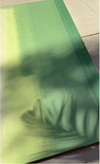
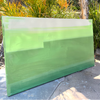
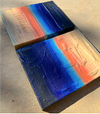
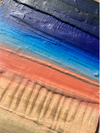
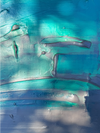
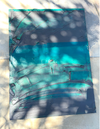
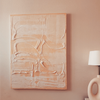
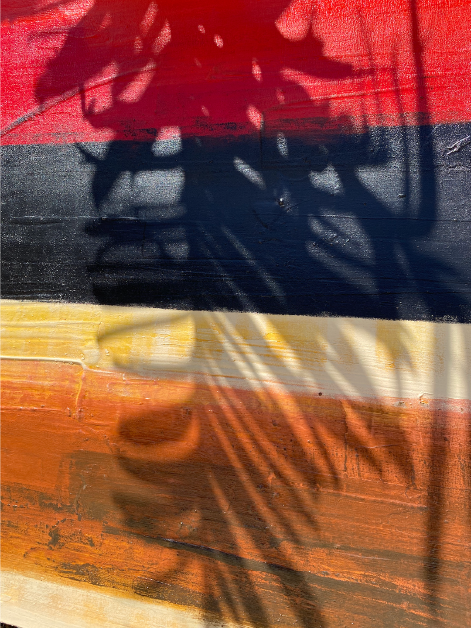
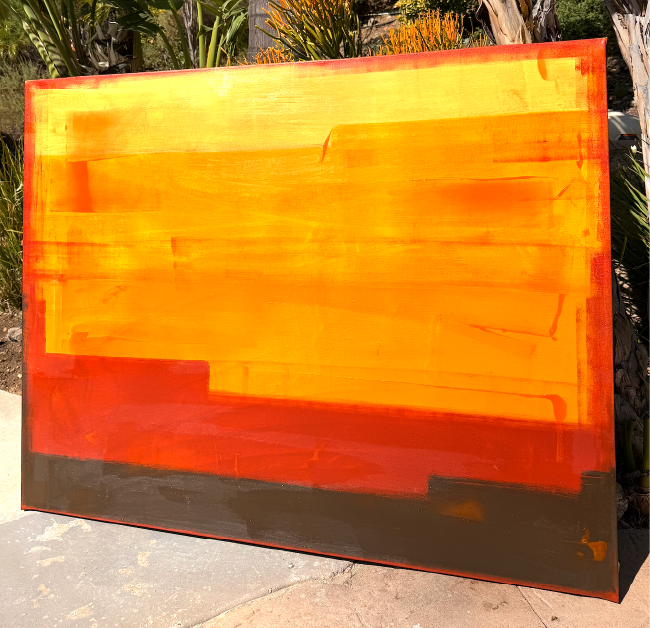
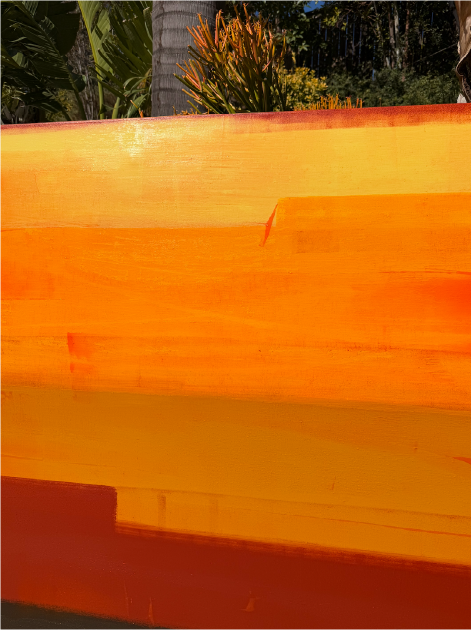
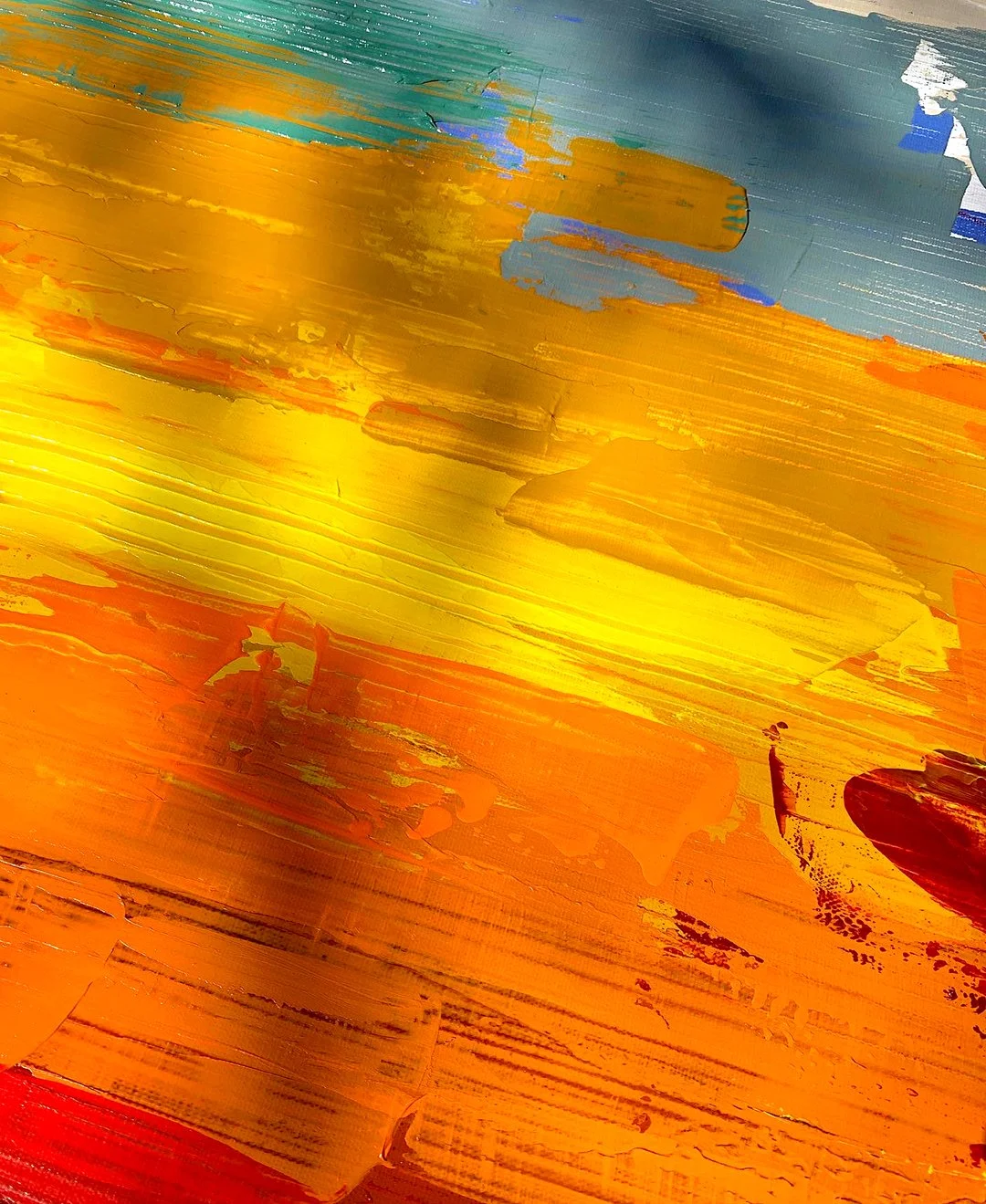
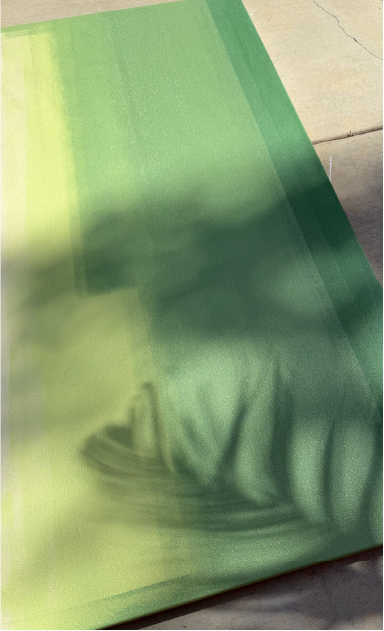
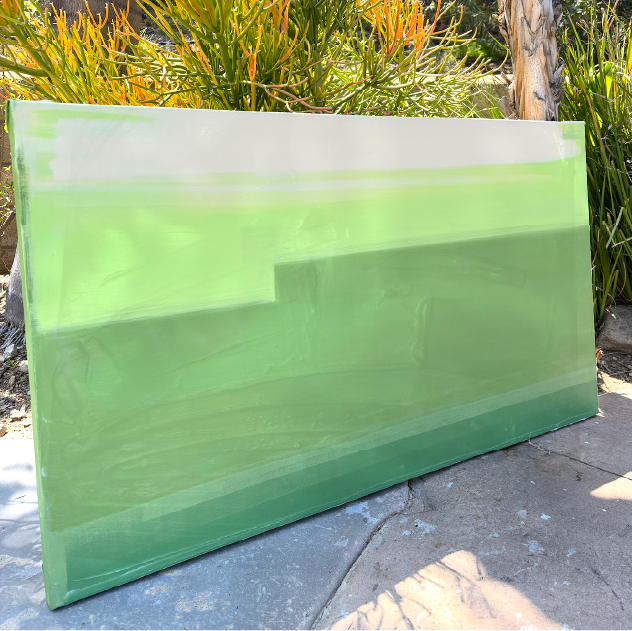
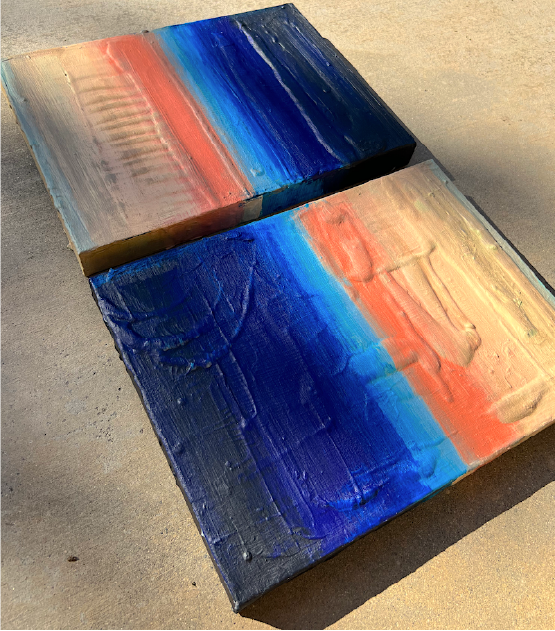
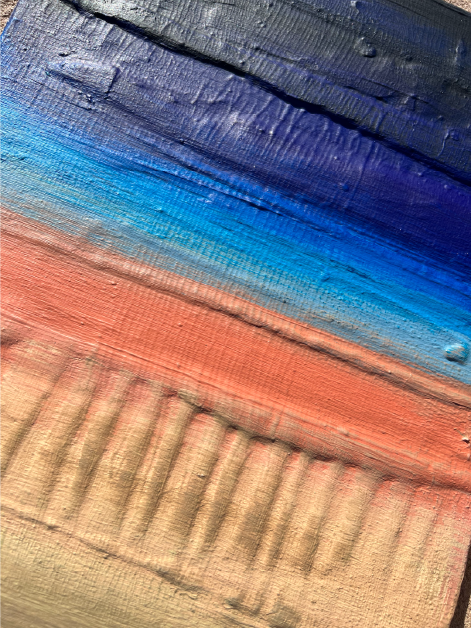
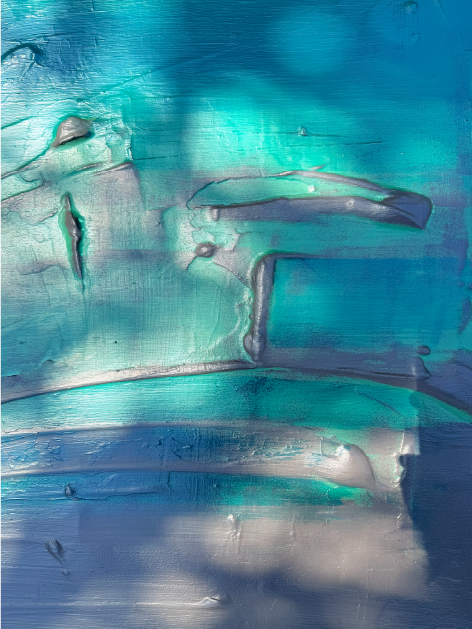
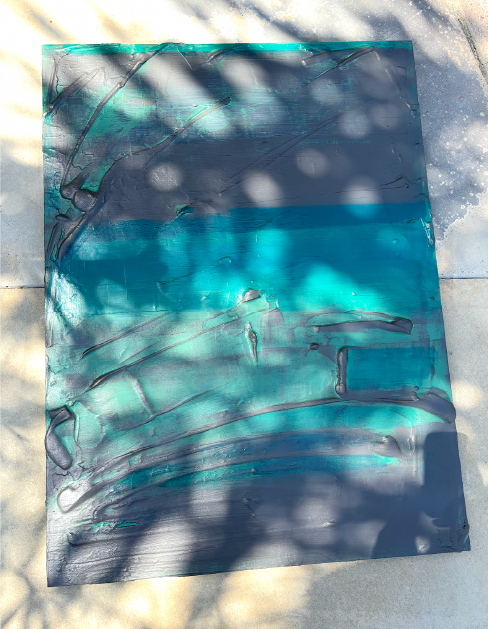
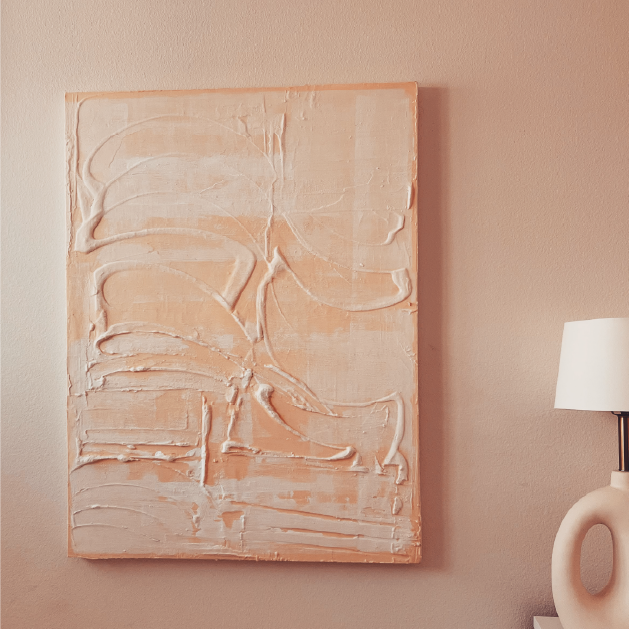
Each painting starts with a canvas I stretch by hand, then a mix of acrylic and plaster I build up in ridges and folds — more like landscape than paint. The plaster holds the memory of the gesture that made it: a groove, a drip, a fold that reads differently depending on where you're standing and how the light hits it, the same way a hillside shifts color from morning into evening. I'm not trying to depict the mountains literally. I'm trying to work the way they work — layered, weathered, built by many passes over long stretches of time.
Color, here, isn't decorative — it's the whole point. Each piece is really a study in what a specific color, or a specific transition between colors, does to the body standing in front of it. That's the color therapy at the center of this work: an orange horizon isn't a sunset, it's an attempt to physically warm the room it hangs in. A field of blue isn't water, it's an attempt to slow someone's breathing down.
I trained as a painter before I ever trained as a designer, and this practice is where that first language still lives — before branding, before clients, before deadlines. Califas is a return to that language, and to the state that taught it to me.